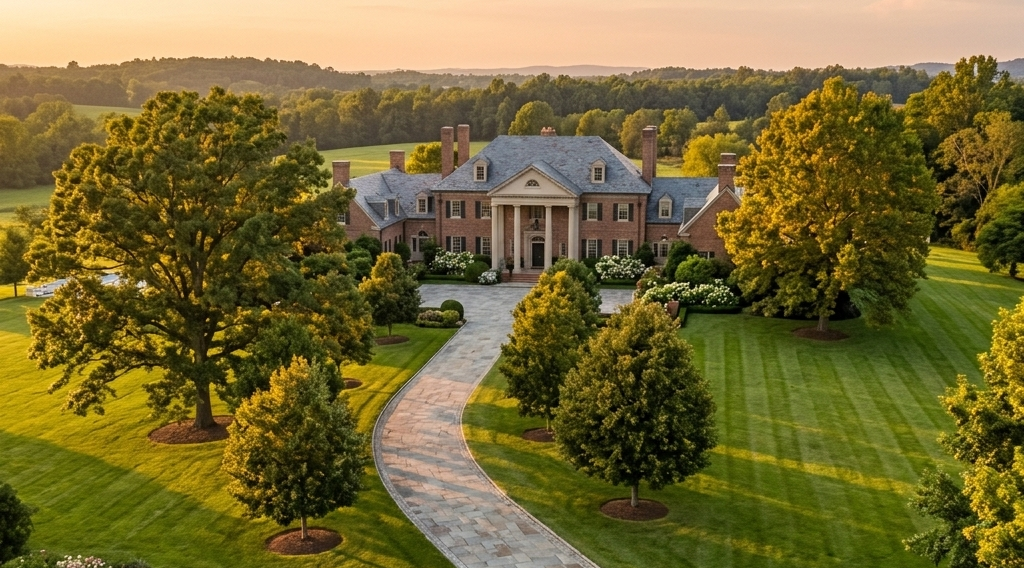
Your 4-acre property in Harford County deserves more than the landscaping company that handles quarter-acre lots in subdivisions. When you have mature specimen trees, a circular driveway, multiple outdoor living areas, and expectations that everything looks perfect year-round, you need a different level of expertise.
Most landscaping companies say they can handle large properties. But when you’re managing drainage across five acres, coordinating irrigation zones for different microclimates, maintaining hedge rows that stretch 200 feet, and keeping grounds that look like they belong in a magazine? That requires equipment, experienced crews, and project management capabilities that most companies simply don’t have.
Oakfield Landscaping specializes in luxury and estate landscaping throughout Harford County. We’ve designed and maintained some of the area’s finest properties, handling everything from multi-year master planning to the weekly maintenance schedules that keep your grounds looking professionally managed. We understand that estate landscaping isn’t just bigger—it’s fundamentally different work.
What Makes Estate Landscaping Different
Estate landscaping isn’t just “regular landscaping but larger.” It’s a completely different approach that requires master planning, phased installation, and ongoing coordination across multiple outdoor systems.
The scale alone changes everything. While a typical residential lot in Harford County might be a quarter to half acre, estate properties start at 2 acres and often extend to 10 acres or more. That’s not just more grass to mow—it’s multiple distinct outdoor environments that need to work together as a cohesive whole.
Estate properties have complexity that suburban landscaping never encounters. You’re creating multiple outdoor “rooms”: formal gardens near the house, naturalized areas in back, entertainment spaces around the pool, play areas for grandchildren, and utility zones that need to be functional but hidden from view. Each zone has different design requirements, plant selections, and maintenance needs.
We plan estate landscapes with 10 to 20-year timelines in mind. When we install a row of evergreens to screen your property line, we’re thinking about what those trees will look like when they’re 30 feet tall. When we design your driveway plantings, we’re selecting specimens that will still look proportional to your home as they mature over decades.
The coordination requirements are substantial. Your estate property needs irrigation systems with 8 or 10 different zones, each programmed for specific plant needs. You need landscape lighting that covers long driveways, illuminates specimen trees, and provides security without looking like a parking lot. You need drainage solutions that move water across acres without creating erosion or flooding problems.
And the maintenance expectations are different. A suburban homeowner might accept that the yard looks a little rough for a week after vacation. Estate properties need to look perfect every single day. That means weekly maintenance visits, immediate response to storm damage, and seasonal transitions that happen seamlessly.
Common features on Harford County estate properties include circular or long driveways (often 500 feet or more), multiple entrance points, pool areas with extensive hardscaping, outdoor kitchens and entertainment spaces, guest houses or pool houses with their own landscaping needs, and established gardens or specimen trees that predate any new work.
We typically recommend phased installation for properties over 3 acres. Installing everything at once is expensive, disruptive, and doesn’t allow plants to establish gradually. A three-year installation plan lets you spread the investment, learn how you actually use different areas of your property, and make adjustments as the landscape matures.
Estate Landscaping Services We Provide in Harford County
We handle every aspect of estate landscaping, from initial design to weekly maintenance, so you have one team managing your entire property. This continuity matters—the crew who maintains your grounds understands the designer’s vision, and everyone knows your property’s specific quirks and needs.
Custom Landscape Design and Master Planning
Site analysis for a 5-acre property takes a full day, not an hour. We walk every part of your land, noting existing mature trees, natural drainage patterns, soil variations, views to preserve, and areas that need screening. We look at how you’ll actually move through the property—where paths and driveways should go based on real use, not just aesthetics.
Master plans for estate properties show the full vision but break installation into manageable phases. Phase one might be infrastructure: grading, drainage, and irrigation systems. Phase two brings in the plantings, once everything else is established.
We design with formal and natural zones appropriate to different areas. The front of your home might call for structured, symmetrical plantings that make a statement. The back three acres might be better suited to naturalized areas with native plants and meadow grasses that require less maintenance.
Integration with existing features is critical. If you have 80-year-old oak trees, everything else needs to work around them—protecting root zones during construction, designing beds that complement their scale, and planning for eventual succession if those trees decline.
Estate Installation and Renovation
Large-scale plantings for estates mean thinking in different quantities. We’re not planting three shrubs—we’re installing 200-foot hedge rows with 40 evergreens, foundation beds that wrap around a 6,000-square-foot home, and specimen trees with 4-inch caliper trunks that arrive on specialized trucks.
Grading and drainage across multiple acres requires understanding how water moves through your entire property, not just near the house. We’ve solved drainage issues on estates where water was traveling 300 feet from the road, across lawns and gardens, before finding its way to storm drains. The solutions involve multiple catch basins, underground piping, and berms that redirect water invisibly.
Our Luxury Landscape services page will give you all the information you need to start a consultation with us on your property.
Water Features and Irrigation Systems
Pond installation and maintenance for estate properties involves pumps, filtration systems, and aquatic plant management at a completely different scale than backyard water features.
Zone-based irrigation for large properties might include 10 or 12 different programs. The formal beds near your front entrance need different watering than the naturalized areas in back. Newly installed trees need daily watering their first season, while established lawn areas need deep, infrequent watering. We design systems that can handle these variations without you thinking about it.
Water management across multiple acres includes not just irrigation but also drainage integration. Your irrigation system needs to work with the property’s natural drainage, not against it.
Backflow prevention and system monitoring matter more on estates because the systems are complex enough that problems can be expensive. We install smart controllers that alert us to leaks or malfunctions, often before you’d notice anything wrong.
Landscape Lighting Design
Lighting design for long driveways and large properties requires 30 to 50 fixtures or more, carefully positioned to provide safety and beauty without over-lighting. We light the edges of driveways every 30 feet, create pools of light under tree canopies, and ensure there are no dark gaps where guests would feel uncertain.
Specimen tree uplighting transforms your property at night. Those mature oaks and maples that define your property during the day can be dramatic focal points after dark. We use commercial-grade fixtures with adjustable beams to highlight specific branches and tree structure.
The balance between security lighting and aesthetic lighting is tricky on estates. You want the property well-lit for safety, but you don’t want it looking like a commercial parking lot. We use warm color temperatures (2700K-3000K), shield fixtures to prevent glare, and layer different types of lighting so the overall effect is sophisticated.
A typical 5-acre estate property might have 40 to 60 landscape lighting fixtures, including path lights, uplights for trees, downlights in large trees to illuminate patios, accent lights for hardscaping, and well lights for architectural features. The system runs on multiple zones so you can control different areas independently.
Tree Services for Estate Properties
Managing mature specimen trees is long-term work. We monitor the health of significant trees, prune on multi-year cycles, treat for diseases or pests specific to Harford County (like emerald ash borer or oak wilt), and plan for succession when historic trees decline.
New tree installation at estate scale means 3-inch to 5-inch caliper trees, not the 1-inch saplings that work in suburban yards. These larger trees provide immediate impact but require specialized equipment to plant, proper staking and guying, and careful attention to watering their first two years.
Tree health monitoring across multiple acres is something we build into maintenance contracts. Our crews notice when a tree’s canopy thins, when bark shows signs of disease, or when storm damage needs immediate attention. Catching problems early saves trees and prevents hazards.
Storm damage response for estates is a priority service. When high winds bring down a major tree on your property, we have the equipment and crews to respond within hours, not days. We’ve cleared 60-foot oaks off driveways and removed hazard trees leaning over homes after severe storms throughout Harford County.
Year-Round Estate Maintenance
Weekly or bi-weekly maintenance schedules keep estate properties looking professionally managed. Our crews arrive the same day each week, handle mowing, trimming, edging, weeding in beds, and deadheading spent flowers. The property always looks fresh because it never gets behind.
Seasonal services on large properties are bigger undertakings than suburban lawn care. Spring cleanup might fill three dump trucks with debris. Fall leaf management on a 5-acre property with mature deciduous trees can mean 8 to 10 visits as leaves drop in waves. We schedule these services proactively so you never have that “overwhelmed by leaves” moment.
Estate-level maintenance means higher standards and faster response times. If we see a problem during a regular visit—an irrigation head that’s not working, a plant showing stress, or storm debris—we handle it that visit or schedule a fix within 24 hours. You shouldn’t have to manage your landscaping company.
Crew size and equipment for estate properties is different than what works for subdivision homes. We send crews of 3 to 4 people with commercial zero-turn mowers (60-inch decks), commercial trimmers and edgers, and a truck large enough to haul away substantial debris. The crew that maintains a half-acre lot can’t efficiently handle five acres.
For more information about our full range of services, visit our luxury landscaping services page.
Materials and Design Elements for Harford County Estates
Estate landscaping requires premium materials that match the quality of your property and stand up to Maryland weather over decades, not years. Cutting corners on materials means replacing work in 5 to 7 years instead of enjoying it for 20 or 30.
Plant Selection for Harford County
Native plants that work in Harford County include Eastern red cedar, Virginia sweetspire, black-eyed Susans, little bluestem grass, and inkberry holly. These plants evolved here, handle our soil and rainfall patterns naturally, and support local wildlife.
Specimens that provide year-round interest are essential for properties you see every day. We design with layers: spring bulbs and flowering trees, summer perennials, fall color from deciduous trees and grasses, and winter structure from evergreens and ornamental bark.
Mature tree varieties we install frequently include red oak, willow oak, tulip poplar, American beech, and Eastern white pine. These grow well in Harford County’s Zone 7a climate, reach substantial size, and live 100-plus years with proper care.
Harford County soil tends toward clay in many areas, which affects plant selection and bed preparation. We amend planting beds extensively, often bringing in 6 to 8 inches of topsoil and compost mix before planting. Plants that tolerate clay (river birch, bald cypress, inkberry) do better than plants that demand perfect drainage.
Deer pressure is real throughout Harford County, especially on larger properties that back to agricultural or wooded land. We design with this in mind, using deer-resistant plants like boxwood, juniper, ornamental grasses, and catmint in vulnerable areas. No plant is truly deer-proof when deer are hungry, but you can reduce damage significantly with smart choices.
Lighting Fixtures Built to Last
Commercial-grade versus residential lighting fixtures is the difference between a system that works perfectly for 15 years and one that needs fixture replacements every 3 to 4 years. We use cast brass or copper fixtures that patina beautifully and LED lamps rated for 50,000 hours.
Bronze and copper are appropriate for estates because they look substantial, not cheap. The fixtures have weight to them. The patina that develops over time looks intentional, like the material is supposed to age that way.
LED longevity matters in landscape lighting because fixtures are often buried in beds or mounted high in trees. Replacing bulbs isn’t a simple 5-minute job—it might mean digging up a bed or getting a lift truck to reach a tree-mounted fixture. LED lamps that last 10-plus years eliminate most of that maintenance.
Irrigation Components That Don’t Fail
Professional-grade irrigation systems use components that cost more upfront but last 15 to 20 years instead of 7 to 10. Hunter or Toro commercial heads, Rain Bird commercial valves, and UV-resistant piping make the difference between a system you forget about and one that needs constant repairs.
Smart controllers adjust watering based on weather, soil moisture, and plant needs. We install systems that connect to local weather stations, skip watering cycles when it’s rained, and alert us to broken lines or leaks. On a large property where a leak could run unnoticed for weeks, this technology pays for itself quickly.
Why this matters for large properties: when you have 10 to 12 irrigation zones covering 5 acres, system reliability is critical. A failed valve that runs continuously could waste thousands of gallons and create drainage problems. Quality components prevent those failures.
Why Location Matters: Landscaping for Harford County’s Climate and Soil
Harford County has specific climate, soil, and environmental conditions that affect what plants thrive and how designs need to be built. Working with a local company means your landscape is designed for this area specifically, not copied from a design that worked in Virginia or Pennsylvania.
Climate and Hardiness
Harford County sits in USDA Hardiness Zone 7a, with average winter lows of 0°F to 5°F. This matters for plant selection—we can grow crape myrtles and certain Southern magnolias that don’t survive further north, but we can’t reliably grow plants that thrive in Zone 8.
Average rainfall in Harford County is about 45 inches per year, relatively evenly distributed across seasons. This is enough that established landscapes don’t require constant irrigation, but new plantings and formal gardens need supplemental watering during July and August dry spells.
Summer heat and humidity affect plant choices. Plants that tolerate heat and humidity (river birch, bald cypress, Eastern red cedar) perform better than plants that prefer cool, dry summers. We avoid plants that commonly develop fungal issues in humid conditions unless you’re committed to preventive treatment programs.
Winter freeze-thaw cycles are hard on hardscaping. Harford County typically has 30 to 40 freeze-thaw cycles per winter, which is why proper base preparation and quality materials matter so much. Shortcuts in construction show up within 2 to 3 years as cracking and heaving.
Soil Conditions
Soil types in Harford County range from clay to loam, with clay predominating in many areas. Clay soil holds moisture but drains slowly, so we design beds with proper drainage and amend extensively with compost and topsoil to improve texture.
Many properties in northern Harford County have rocky soil—you might hit ledge rock 18 inches down, which complicates tree planting and utility trenching. We price projects with contingencies for rock because you don’t know what’s underground until you dig.
Soil testing before major plantings tells us pH (often slightly acidic to neutral in Harford County) and nutrient levels. We amend based on actual conditions rather than assumptions, which gives plants the best start.
Local Environmental Factors
Deer pressure throughout Harford County affects plant selection significantly. Properties backing to agricultural land or forest see heavy deer browsing. We design with deer-resistant plants in vulnerable areas and recommend fencing for vegetable gardens or high-value plantings.
Common pests specific to Maryland include Japanese beetles (which defoliate roses, lindens, and many other plants in July), spotted lanternfly (an emerging threat), and voles (which damage roots and bark on young trees in winter).
Native plants that thrive specifically in Harford County include Eastern red cedar, Virginia sweetspire, inkberry holly, black-eyed Susans, little bluestem grass, and river birch. These plants evolved in this region, tolerate local soil and climate naturally, and support native wildlife.
Local Regulations and Practices
Water use regulations in Harford County are generally permissive, but water quality regulations matter if your property is near streams or the Chesapeake Bay watershed (most of the county). We design with rain gardens and bioretention areas to manage stormwater on-site rather than creating runoff.
Tree removal regulations vary by municipality. Some areas of Harford County require permits for removing significant trees, especially in designated forest conservation areas. We handle this research and permitting as part of project planning.
Local suppliers and material availability affects what we can source efficiently. We work with quarries and nurseries throughout Maryland, which means better material selection and pricing than companies that source from distant suppliers.
Why this matters practically: a landscape design that worked beautifully in Montgomery County might fail in Harford County. The soil is different. The deer pressure is worse. The climate is slightly cooler in winter. When we design landscapes for Harford County, we’re drawing on years of experience with what actually works here—not transplanting ideas from other regions and hoping they adapt.
Investment and Timeline Expectations for Estate Landscaping
Estate landscaping is a significant investment—often the largest outdoor investment you’ll make besides the property itself. Here’s what affects cost and how long projects actually take.
Budget Ranges for Estate Work
Estate landscaping projects in Harford County typically range from $100,000 to $500,000-plus depending on property size, scope, and material selections. A complete landscape renovation on 3 to 5 acres with new master plan, infrastructure, and extensive plantings usually falls in the $200,000 to $350,000 range.
Smaller estate projects—perhaps updating an entrance area, adding a pool landscape, or renovating formal gardens—might range from $50,000 to $150,000. These are still substantial investments but more focused in scope.
Maintenance investments for estate properties typically run $2,000 to $5,000 per month for weekly service during the growing season, depending on property size and service level. This includes mowing, trimming, edging, bed maintenance, seasonal color changes, and general property care. Year-round contracts that include spring and fall cleanup, mulching, and winter services adjust these numbers accordingly.
What Affects Cost
Property size is the obvious factor—5 acres costs more than 2 acres—but it’s not linear. A well-designed 5-acre property might cost less than a complicated 2-acre property with difficult access, and significant grading needs.
Material selection dramatically affects pricing. A driveway in crushed stone costs $15 to $25 per square foot. The same driveway in thermal bluestone costs $50 to $80 per square foot. Both work, but the bluestone lasts 30 years and looks appropriate on high-end estates. Multiplied across hundreds of square feet, these choices add up to tens of thousands of dollars.
Existing conditions affect cost in ways you can’t always predict. If we hit ledge rock during excavation, removal adds to the budget. If existing drainage is worse than expected, solutions are more extensive. If old landscaping needs removal and disposal, that’s additional cost. Good contractors build contingencies into estimates for these possibilities.
Access and terrain matter significantly. Properties with steep slopes require specialized equipment and more labor. Properties with limited access (can we get a large truck to the work area, or do we need to hand-carry materials?) affect efficiency and therefore cost.
Typical Timelines
Design phase for estate projects typically takes 4 to 8 weeks from initial consultation to final approved master plan. This includes site analysis, concept development, design revisions, and final specifications.
Installation timelines vary by scope. A complete estate landscape renovation might take 3 to 6 months of continuous work, or 12 to 24 months if phased. Weather affects timelines—we shouldn’t plant during extreme heat or drought.
Full landscape maturation takes 5 to 10 years. This isn’t a negative—it’s how landscapes work. Trees need time to grow. Shrubs need seasons to fill in. The landscape you install today will look good immediately but will look mature and established after several years of growth and care.
Example timeline: A 3-acre property with new master plan, complete irrigation and lighting systems,= and phased plantings typically takes 12 to 18 months from design start to final planting installation. The property is usable and looks intentional throughout this process, with each completed phase functioning as a finished landscape.
Why Cheap Bids Fail on Estate Projects
The cheapest bid on an estate project is rarely the best value. Companies that underbid often lack the equipment, experience, or crew capability to execute at the level estates require. They cut corners on materials, installation methods, or project management.
Examples we’ve seen: contractors who installed irrigation without proper mainline sizing (so zones in back never get adequate pressure), hardscaping installed without proper base preparation (resulting in settling and heaving within 2 years), and plantings that looked good initially but failed because improper bed preparation meant poor drainage.
Estate landscaping should be priced based on proper methods, quality materials, and the expertise to execute complex projects. A $250,000 landscape that lasts 20 years and looks perfect throughout is better value than a $180,000 landscape that needs replacement in 8 years.
When comparing bids, look at material specifications, installation methods, crew size and experience, project timeline (rushed projects sacrifice quality), and references from similar properties. The lowest number isn’t the best choice when you’re investing at this level.
Choosing an Estate Landscaping Company in Harford County
Not every landscaping company can handle estate properties. Here’s what to look for when vetting companies and questions to ask before hiring.
What to Look For
Experience with large properties is non-negotiable. Ask to see a portfolio of 2-acre-plus projects the company has completed. Photos should show scale—not just pretty close-ups of plants, but wide shots that demonstrate the company understands large-property design and maintenance.
In-house capabilities matter more at estate scale. Companies that subcontract everything lose quality control. We handle design, installation, and maintenance in-house with our own crews. This means better coordination, consistent quality, and accountability.
Equipment requirements for estate work include commercial-grade mowers (60-inch zero-turn decks), excavators and skid steers for grading, trenchers for irrigation and lighting, dump trucks for material hauling, and vehicles capable of towing equipment to job sites. Companies without this equipment can’t efficiently handle estate work.
Crew size and training affect quality and timeline. Estate installation requires crews of 4 to 6 skilled workers, not 2 people with a pickup truck. Ask about crew training, safety programs, and how long lead crew members have been with the company.
Long-term relationship potential matters because estates need ongoing care. You’re not hiring for a one-time project—you’re establishing a relationship that should last 10-plus years. Is this company stable? Will they be around to honor warranties and provide maintenance?
References from similar properties tell you more than generic testimonials. Ask for references from estate clients specifically. Call them and ask about communication, problem-solving, and how the property has held up over time.
Questions to Ask Potential Companies
“How many estate properties do you currently maintain?” gives you a sense of their experience level. If they’re maintaining 8 to 10 estates regularly, they understand the work. If they’re maintaining one or two, you might be their learning experience.
“Who will be my primary contact throughout the project?” clarifies communication structure. You want a dedicated project manager or account manager who knows your property, not whoever answers the phone.
“What happens if there’s a problem after installation?” tests their warranty and service approach. Good companies stand behind their work and fix issues promptly. Poor companies deflect responsibility or nickel-and-dime for warranty service.
“Can I visit completed projects similar to mine?” shows confidence in their work. Companies with impressive estate portfolios are happy to arrange site visits with past clients. Companies without that track record will dodge this request.
“How do you handle storm damage or emergency service?” matters for estate properties. A downed tree blocking your driveway needs same-day response, not “we’ll get to it next week.” Ask about their emergency protocols and response times.
“What’s your approach to seasonal transitions?” reveals whether they think proactively or reactively. Your landscape should transition seamlessly from spring to summer to fall. You shouldn’t have to call and ask them to remove spent annuals or cut back perennials.
Why Oakfield Landscaping
We’ve built our reputation on estate and luxury properties throughout Harford County. Our team has more than a decade of combined experience managing large properties, and we maintain several of the area’s most prominent estates. We’re not a company trying to break into high-end work—we specialize in it.
Frequently Asked Questions About Estate Landscaping
How long does estate landscaping take?
Estate landscaping projects typically take 12 to 24 months from initial design to final installation, often completed in phases. Design and master planning take 4 to 8 weeks. A complete single-phase installation on 3 to 5 acres might take 3 to 6 months of active construction. Phased projects spread over longer periods, which lets you pace the investment and allows earlier phases to establish before later phases begin. The timeline also depends on project scope—a focused renovation of entrance areas might take only 2 to 3 months, while a complete property transformation could take two years.
What’s the difference between luxury and estate landscaping?
The terms overlap but emphasize different aspects. Luxury landscaping refers to high-end materials, sophisticated design, and premium finishes—you might have luxury landscaping on a half-acre property. Estate landscaping specifically refers to large properties (typically 2-plus acres) with the complexity that size brings: multiple outdoor zones, extensive infrastructure needs, and coordination across many systems. Most estate properties have luxury finishes, but not all luxury landscaping is estate-scale. The distinction matters because estate work requires different equipment, crew sizes, and project management approaches than luxury work on smaller properties.
Do you maintain estates year-round?
Yes. Estate properties need year-round attention, not just mowing season maintenance. Our annual maintenance contracts include spring cleanup (removing winter debris, cutting back perennials, mulching beds), weekly growing season maintenance (mowing, trimming, edging, bed care, deadheading), fall services (leaf management, cutting back spent plants, protecting sensitive plants for winter), and winter monitoring (storm damage response, checking that systems are protected). Even in winter when grass isn’t growing, someone should be watching your property.
Luxury and Estate Landscaping, right here in Maryland
Ready to create a landscape that enhances your property and reflects your vision? Our design process begins with an in-depth consultation where we discuss your goals, assess your property, and explore how we can bring your outdoor space to life.