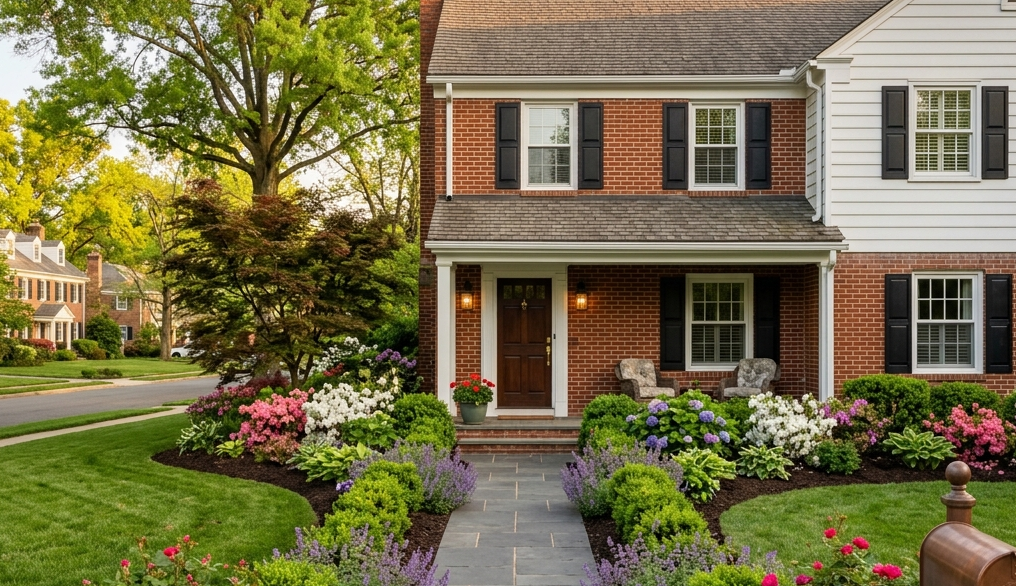
Your landscape looked great when it was installed 10 or 15 years ago. Now the mulch beds are overgrown with weeds, the patio pavers are sinking in spots, and those “small” shrubs are blocking your windows. The whole yard feels dated, like it belongs to a different era of your life.
Every spring you spend money on band-aid fixes. Fresh mulch to cover the problems. New annuals to add color. Trimming back shrubs that just keep getting bigger. But the underlying issues keep getting worse, and your outdoor space doesn’t match how you actually want to use your property anymore.
A planned landscape renovation addresses these core issues all at once. Instead of throwing money at temporary fixes, you get a yard that works for how you live today—with outdoor spaces you’ll actually use and plantings that enhance your property instead of overtaking it.
What Landscape Renovation Actually Means (And What It Costs in Harford County)
Landscape renovation means systematically updating or replacing major elements of your existing landscaping. It’s more than seasonal maintenance, but less than tearing everything out and starting from scratch.
This isn’t about mowing the lawn or adding a few new plants. Renovation is a targeted overhaul of specific landscape elements while keeping what still works well.
A typical renovation project includes removing and replacing overgrown or dead plantings, and redesigning mulch beds with better layouts. We often add or update drainage systems that have failed over time, install new outdoor lighting, and create new functional spaces like fire pit areas or outdoor kitchens.
The investment for landscape renovation in Harford County varies based on your property size and scope. A small-scale refresh of a front yard typically runs $8,000 to $15,000. Mid-range renovations covering larger areas fall in the $20,000 to $45,000 range. Comprehensive estate renovations that transform an entire property start around $50,000 and go up from there.
These aren’t small numbers, but compare them to what you’d spend on a kitchen renovation. Your outdoor spaces add similar value and usability to your home—they just often get overlooked in improvement budgets.
7 Signs Your Harford County Property Needs Landscape Renovation (Not Just Maintenance)
If you’re dealing with any three or more of these issues, you’re past the point where seasonal maintenance will fix the problem.
1. Your Plants Have Completely Outgrown Their Spaces
Foundation shrubs that were supposed to stay three feet tall are now blocking windows. Trees are crowding the house or each other. What started as a neat row of evergreens is now a solid wall of overgrown greenery.
Pruning overgrown plants just creates odd shapes and weak growth. Those yews planted too close to your front door 20 years ago won’t suddenly become the right size with better trimming.
2. Drainage Problems Are Getting Worse Every Year
Standing water appears in the same spots after every rain. Erosion channels are cutting through your beds. Water pools near your foundation where it never used to.
These problems are often caused by settled soil, changed grading over time, or drainage systems that failed from the original installation. They don’t improve on their own.
3. Your Hardscaping Is Failing
Paver patios are sinking in spots or have weeds growing between every stone. Concrete walkways have cracks that get bigger each winter. Retaining walls are crumbling or leaning.
These issues only get more dangerous and expensive over time. Failed hardscaping is a safety liability and an eyesore.
4. You Don’t Actually Use Your Outdoor Spaces
The deck faces the wrong direction and gets too hot in summer. Your patio is too small for the gatherings you want to host. There’s no privacy from neighbors, so you rarely sit outside.
Your lifestyle has changed over the past decade, but your landscape hasn’t. Maybe you have grandkids now who need play space, or you work from home and want a peaceful outdoor retreat.
5. The Design Looks Dated
Overly formal layouts with rigid geometric beds. Excessive ornamental grasses that were trendy 15 years ago. Color schemes that scream 2005.
Landscaping trends from a decade or more ago stand out to visitors, and not in a good way. Your house might be updated inside, but the exterior is stuck in the past.
6. You’re Spending More Each Year on Band-Aid Fixes
You’re constantly replacing the same plants that keep dying. Mulch needs refreshing twice a year to look decent. You’ve tried three different temporary drainage solutions.
All that money should go toward permanent solutions. Add up what you’ve spent on fixes over the past three years—it’s probably a significant chunk of a proper renovation budget.
7. Your Property Doesn’t Match Your Home’s Value
You’ve renovated the kitchen, updated bathrooms, and refinished floors. But step outside and it still looks like it did when you bought the place years ago.
This curb appeal disconnect becomes obvious when you’re entertaining or if you decide to sell. First impressions happen from the street, not inside your beautiful kitchen.
What Gets Replaced vs. What Gets Kept in a Typical Renovation
Smart renovation isn’t about ripping everything out. It’s about identifying what’s worth saving and what’s actually costing you money to keep.
Usually, overgrown foundation plantings get replaced. Those old yews and overgrown junipers that are blocking windows or swallowing your front entrance can’t be salvaged with pruning.
Ineffective drainage systems get rebuilt properly. Dead or severely declining trees and shrubs come out, along with outdated landscape lighting (or the complete lack of it). Poorly designed mulch bed layouts get rethought, and struggling annual or perennial plantings that aren’t thriving in their locations get replaced with better choices.
On the other hand, mature trees in good health usually stay. A healthy 30-year-old maple or oak has tremendous value—both aesthetically and monetarily. Quality hardscaping in good condition gets integrated into the new design. Well-functioning irrigation systems stay. Successful plantings in appropriate locations remain. Stone walls or features with character often become focal points in the new design.
Then there’s the in-between category. Existing patios and walkways can often be refreshed instead of replaced—cleaning, re-leveling, and adding border plantings can transform them. Mature shrubs sometimes can be relocated rather than removed if they’re healthy but just in the wrong spot. Retaining walls might just need repair or re-facing rather than complete reconstruction.
What Landscape Renovation Costs in Harford County (Real Numbers)
Most landscape renovations in Harford County run between $15,000 and $50,000. Here’s how to understand what drives the pricing.
What Drives the Cost
Demolition and removal typically accounts for 10 to 20 percent of total project cost. Large plant removal and disposal, and soil removal all require equipment, labor, and disposal fees.
Planting and softscaping includes mature trees at $400 to $1,200 each installed, large shrubs at $75 to $300 each, and perennials and groundcovers at $8 to $25 each. Soil preparation and amendments add cost but are non-negotiable for long-term success. Mulch installation runs about $75 per cubic yard installed.
Systems and features vary widely. Drainage solutions range from $2,000 for simple fixes to $8,000 or more for comprehensive property-wide systems. Landscape lighting costs $200 to $400 per fixture installed. Irrigation runs $800 to $1,500 per zone. Water features have an enormous range based on type and complexity.
Sample Project Costs
A small front yard renovation covering about 2,500 square feet typically costs $12,000 to $18,000. This includes removing and replacing overgrown plantings, new mulch bed design, an updated walkway, and landscape lighting.
A backyard patio and planting renovation covering 4,000 square feet runs $28,000 to $42,000. This includes a new paver patio, updated planting beds, privacy plantings, lighting, and drainage correction.
Comprehensive property renovations for one acre or more start around $60,000 and go up significantly from there. These include multiple outdoor living spaces, extensive plantings, lighting throughout the property, possible water features, and complete property transformation.
Most companies require a deposit to begin design work and order materials. Payment milestones typically align with project phases. Spring and fall are busiest seasons, so lead times may be longer—plan ahead if you want work done during optimal times.
Renovation Mistakes Harford County Homeowners Make (And How to Avoid Them)
Most landscape renovation regrets come from three preventable mistakes: wrong timing, unclear priorities, and choosing based on price alone.
Mistake #1: Renovating Without a Clear Purpose
Some homeowners start with a vague idea to “update the landscaping” without defining how they want to use the space. This results in pretty but non-functional areas that still don’t meet their needs.
Start with activities and usage, then design around that. Do you want to host dinner parties for eight on the patio? That requires a different setup than someone who wants a quiet reading nook.
Mistake #2: Doing It in Pieces Over Multiple Years
Trying to save money by spreading work across three or four years often costs more in the end. Multiple mobilizations mean paying startup costs repeatedly. We might damage completed areas during later phases. Design continuity suffers when trends and materials change year to year. Prices generally increase annually too.
Save up and do it comprehensively, or at least complete functional areas fully before moving to the next phase. A finished front yard is better than half-finished front and back yards.
Mistake #3: Choosing Based on Lowest Price
Landscape renovation is not a commodity service. Low bids often mean cheaper materials that won’t last, inexperienced installation, corners cut on drainage and preparation, or no real design expertise.
Compare value and expertise, not just bottom-line numbers. Ask what specific materials they’re using, how they handle drainage, and what their warranty covers.
Mistake #4: Wrong Season Planning
Homeowners sometimes try to start a renovation in June with a July completion deadline, or expect immediate results from fall plantings. Summer heat stresses new plants severely. Winter freezes make quality hardscape installation nearly impossible.
Plan renovations for spring (best) or fall. Avoid summer heat and winter freezes. Accept that plants need time to establish and won’t look magazine-ready on day one.
Mistake #5: Not Addressing Drainage
Focusing on plants and pretty hardscaping while ignoring water management leads to failed installations within two to three years. Proper drainage is non-negotiable in Harford County with our heavy clay soils.
If a contractor isn’t talking about drainage during the proposal phase, that’s a red flag.
Mistake #6: Trendy Design That Won’t Age Well
Following current trends too closely means your landscape will look dated again in five years. Remember when everyone wanted tall ornamental grasses everywhere? Those landscapes now look as dated as shag carpet.
Stick with classic design principles and proven plant selections. Save trends for accent plantings you can easily change.
Why Harford County Properties Need Different Approaches Than Other Areas
Harford County’s specific soil conditions, weather patterns, and deer pressure mean renovation approaches that work elsewhere won’t work here.
Soil Challenges
Heavy clay content dominates most of Harford County. Drainage isn’t just nice to have—it’s critical for any landscape to survive. Clay soil often requires significant amendment for successful plantings.
What looks like “good” soil may actually be compacted fill from original home construction. We test drainage and amend soil before planting, not after plants start failing.
Climate Considerations
Zone 7a growing conditions mean we can grow a good range of plants, but hot, humid summers stress certain species. Occasional harsh winter freezes kill marginally hardy selections.
Deer Pressure
Deer pressure is significant in most of Harford County, especially in rural areas near Forest Hill, Jarrettsville, and Fallston. This severely limits plant selection unless you’re willing to fence or protect plantings.
Beautiful designs from garden magazines featuring hostas, daylilies, and hybrid roses become deer salad bars here. We select deer-resistant plants or design with protection measures from the start.
Water Table and Drainage
Areas near the Susquehanna River or its tributaries may have high water tables that affect planting depths and drainage solutions. Storm drainage can be inadequate in older developments that weren’t built to current standards. Heavy rainfall events common in our area require proper grading.
Local Material Availability
We specify stone and materials that make sense in Harford County based on local availability and what holds up in our climate. Lead times for specialty products can be long. Local suppliers often provide better value than specialty imports once you factor in shipping.
HOA Considerations
Many newer Harford County developments have landscape guidelines through homeowners associations. Renovation plans may require architectural review before you can proceed. Check before design gets too far along to avoid expensive redesigns.
We’ve been working in Harford County for over 15 years, so our plant selections and installation methods are proven for these specific conditions—not just copied from a national design magazine.
Landscape Renovation vs. Starting From Scratch: Which Does Your Harford County Property Need?
If your property has good bones—functional layout, healthy mature trees, working hardscaping—renovation makes sense. If fundamental issues exist throughout, starting over may actually be more cost-effective.
Renovation makes sense when your property has mature trees worth designing around. If the basic layout works but just needs updating, renovation preserves what’s good. Hardscaping that can be repaired or refreshed is worth keeping. Localized drainage issues can be fixed without redoing everything.
Working around existing structures like pools, sheds, or fencing often favors renovation. Budget considerations sometimes make phased renovation improvements smarter than complete replacement.
Starting fresh makes sense when you have property-wide drainage failure that affects everything. If everything is overgrown or dead with nothing worth saving, starting over may cost only slightly more than comprehensive renovation. Completely failed hardscaping throughout the property often tips the scale toward starting fresh.
If the layout doesn’t work at all for how you want to use your outdoor space, trying to work within bad bones wastes money. When starting over costs only 20 to 30 percent more than comprehensive renovation, that small premium often makes sense. Major construction projects like additions or pool installations create opportunities to start fresh while equipment is already on site.
We’ll tell you honestly which approach makes sense during the consultation. Sometimes clients think they need complete demolition when renovation would work fine and save money. Other times clients want to save pieces that are actually costing more to work around than they’re worth.
A hybrid approach often makes sense—completely renovate the front yard for curb appeal and manageable scope, then phase the backyard as a separate project. Or vice versa depending on priorities and budget.
Questions to Ask Before You Start Your Landscape Renovation
These seven questions will help you get clear on what you actually want and prepare you for productive conversations with landscaping companies.
How do we actually want to use our outdoor space?
Be specific about whether you want space for entertaining, privacy from neighbors, improved curb appeal, or low maintenance. “We want to host dinner parties for eight people on the patio” is better than “we want a nice backyard.” This drives everything else in the design.
What’s working that we want to keep?
Identify non-negotiable elements before meeting with designers. Maybe you love the mature dogwood tree or the stone wall your grandfather built. This helps the designer understand your preferences and values.
What frustrates us most about our current landscape?
These become priority fixes in your renovation. Usually it’s drainage problems, excessive maintenance burden, or lack of privacy. Rank your frustrations so budget decisions are easier if you need to prioritize.
What’s our realistic budget?
Knowing your budget range helps focus the design appropriately. It’s better to design once within budget than to design down from an unaffordable plan. Be honest with yourself and your designer about what you can invest.
When do we want this completed?
Your timeline affects scheduling and material selections. Some timelines aren’t realistic—you can’t start in mid-summer and expect fall completion with quality results. Spring and fall schedules fill up months in advance.
How much ongoing maintenance are we willing to do?
This heavily influences plant selections and lawn areas. Be honest about whether you’ll spend hours on weekend gardening or if you want something that looks good with minimal effort. High-maintenance designs fail if you won’t maintain them.
Are there any site challenges we know about?
Drainage issues, utility locations, access problems, and HOA rules should all be disclosed upfront. It’s better to address these during planning than discover them mid-project when changes are expensive.
Think about how long you plan to be in this home too. A three- to five-year timeline might mean different choices than a 20-year forever home where you can enjoy long-term plant maturity.
What to Expect Working With a Harford County Landscape Renovation Company
Professional renovation companies handle everything from design through installation. You should expect clear communication, detailed proposals, and realistic timelines—not vague estimates and surprise costs.
Initial Consultation
We meet you at your property, not just look at photos. We discuss your goals, problems, and budget in detail. This usually takes 45 to 60 minutes. It should be free with no obligation to hire us.
Design and Proposal Phase
You get a detailed design showing layout, materials, and plant selections. The proposal is itemized, not just one lump sum, so you understand where your money goes. We provide timeline estimates and opportunity for revisions before you commit.
This phase may involve a deposit for complex designs, but that’s standard for serious design work.
Pre-Installation Communication
We give you a clear start date with explanation of weather contingencies. We discuss access needs like gate codes, driveway protection, and bathroom access for crew. Material staging areas get identified before the first truck arrives. For properties close to neighbors, we notify them if needed.
During Installation
You get regular updates on progress. There’s a clear point person for questions and decisions that come up. We clean up daily and protect your property throughout. If we discover issues requiring changes, we communicate before making decisions.
Project Completion
We walk through the completed work together. You get care instructions for new plantings and warranty information. Final payment is due when you’re satisfied with the work.
Red Flags to Watch For
Pressure to decide immediately means they need your deposit more than they care about your project. Vague “trust me” estimates without details hide quality compromises. No references or portfolio suggests inexperience.
Unwillingness to pull permits when required (retaining walls over certain heights, significant grading) creates liability for you. Cash-only deals with big discounts often mean unlicensed or uninsured work. Companies that can start immediately with no backlog usually have no backlog for a reason—no one wants to hire them.
Frequently Asked Questions About Landscape Renovation in Harford County
Q: How long does a typical landscape renovation take?
A: Small front yard renovations take one to two weeks. Mid-size backyard projects take two to three weeks. Comprehensive property renovations take four to six weeks or more. Weather delays are common in spring and fall. We schedule buffer time rather than promise unrealistic deadlines.
Q: What time of year is best for landscape renovation in Harford County?
A: Spring (April through May) is ideal because plants have a full growing season to establish. Fall (September through October) works well for hardscaping and woody plants. Avoid summer due to heat stress on new plantings. Winter work is limited to hardscaping in specific conditions, and frozen ground makes some work impossible.
Q: Do I need permits for landscape renovation?
A: In Harford County, retaining walls over four feet typically require permits. Significant grading changes may need permits depending on the scope and location. Most planting and patio work doesn’t require permits. We handle permit acquisition when needed—never skip required permits because it creates liability when you sell.
Q: Will you damage my lawn during the renovation?
A: Equipment access sometimes requires driving on lawn areas. We use protection measures like plywood runners for heavy equipment. Some lawn damage is unavoidable on larger projects. We include restoration in the project—reseeding or resodding affected areas.
Q: How long before new plantings look “full”?
A: First season, expect plants to establish roots with limited top growth. Second season, you’ll see noticeable growth and filling in. Third season and beyond, plantings reach that “established” look. We size plants based on your patience and budget—larger plants cost more but look fuller sooner.
Q: Can you work around my existing irrigation system?
A: Usually yes. We locate existing lines before demolition and integrate them into the new design. Sometimes irrigation needs modification or extension to cover new bed layouts. Occasionally old systems are so deteriorated that replacement makes more sense than patching.
Q: What happens if you find unexpected issues during demolition?
A: We contact you immediately and explain the issue, options, and cost implications. Common surprises include worse drainage problems than visible from the surface, underground utility lines not marked properly, or soil conditions requiring more amendment than estimated. You approve any additional work before we proceed.
Q: Do you offer maintenance after the renovation is complete?
A: Yes. Many clients want us to maintain their renovation investment through our ongoing maintenance services. First-season care is particularly important for establishing new plantings. We offer both comprehensive maintenance and seasonal programs.
Q: How do I know if I’m getting quality materials?
A: Ask specific questions. What brand and grade of pavers? What size plants (measured in gallons or caliper)? What mulch type? Quality companies specify these details in proposals. Generic descriptions like “quality plants” or “nice pavers” hide cheap materials.
Q: Can renovation increase my property value?
A: Good landscape renovation typically returns 70 to 100 percent of investment in increased property value for mid-range projects. Curb appeal matters significantly in home sales. But return on investment shouldn’t be the only consideration—you also get years of enjoyment from improved outdoor spaces.
Ready to Discuss Your Harford County Landscape Renovation?
If your property needs more than maintenance but you’re not sure where to start, we’ll come out for a consultation and give you an honest assessment.
We offer free on-site consultations for Harford County properties. During the visit, we’ll walk your property, discuss your goals and frustrations, and give you realistic options and budget ranges. We usually can schedule consultations within a week.
Have photos of landscapes you like, a list of what frustrates you about your current yard, and a rough budget range in mind. This helps us give you specific recommendations instead of generic ideas.
Oakfield Landscaping has been renovating landscapes in Harford County for over 10 years. We’ve completed hundreds of landscape renovations throughout Bel Air, Fallston, Forest Hill, Jarrettsville, Churchville, and surrounding areas. We know exactly which plants and materials hold up in our local conditions.
This is a no-obligation consultation. We’ll tell you honestly if renovation makes sense or if you’re better off with maintenance for now. If we’re not the right fit for your project, we’ll tell you that too.
For more information about our comprehensive landscape renovation services, visit our main landscape renovation service page.
Revitalize your Landscape
Bring back the landscape that reflects your vision of your home. Our design process begins with an in-depth consultation where we discuss your goals, assess your property, and explore how we can bring your outdoor space to life.